
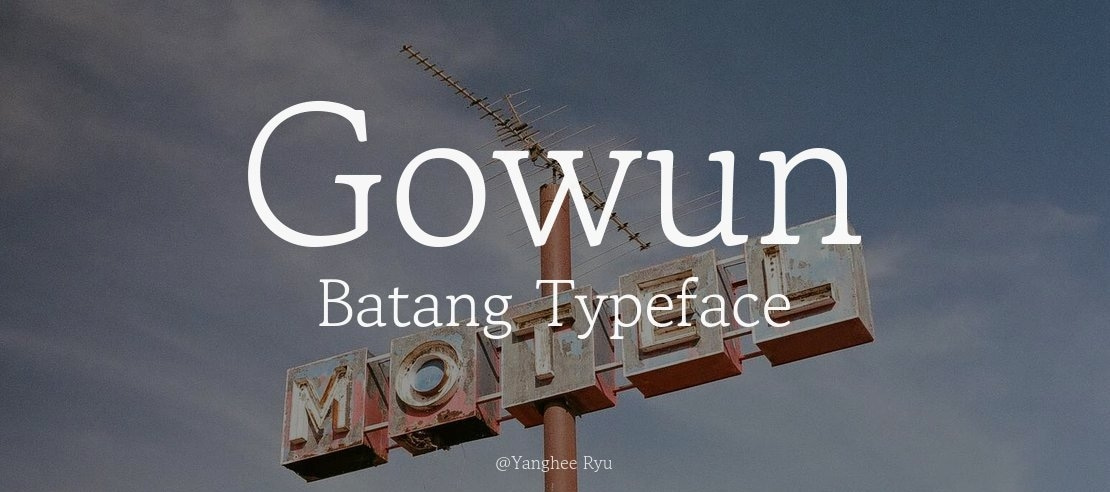
Introduction to Gowun Batang
In the world of typography, where digital fonts often prioritize functionality over personality, Gowun Batang stands out as a refreshing blend of tradition and subtle innovation. This serif typeface, whose name translates roughly to “Neat Serif” in Korean (고운바탕), embodies a minimalist aesthetic while staying deeply connected to Korean cultural and calligraphic heritage. Available for free through Google Fonts, Gowun Batang has gained popularity among designers seeking warmth in text-heavy designs without sacrificing readability.
Designed primarily for Hangul (the Korean alphabet), yet inclusive of Latin characters, Gowun Batang offers a transitional serif style that feels both contemporary and rooted in history. Its clean lines and delicate details make it ideal for body text, books, websites, and editorial content, especially when a touch of elegance and approachability is desired.
Origins and Designer Background
Gowun Batang traces its roots to 2010, when Korean designer Yanghee Ryu first released an earlier version under the name Gowun Hangeul-Batang. The regular weight debuted that year, followed by the bold variant in 2016. In later years, it was refined and renamed simply Gowun Batang, eventually finding a home on Google Fonts, where it became widely accessible worldwide.
Yanghee Ryu, a Seoul-based typeface designer, drew inspiration from everyday handwriting—specifically, the neat, careful pencil script that many Koreans use for notes or personal writing. This personal, human touch contrasts with the more rigid, mechanical serifs found in traditional printing typefaces. Ryu’s work reflects a broader trend in Korean type design: modernizing Hangul while honoring its unique modular structure and historical evolution.
The font is open-source, hosted on GitHub under the Gowun Batang Project, allowing contributions and modifications. This community-oriented approach has helped it evolve into a reliable tool for global designers.
Design Characteristics: Minimalism Meets Warmth
Gowun Batang is classified as a transitional serif, bridging old-style calligraphic influences with more modern, rational forms. Its serifs are modest—not overly bracketed or dramatic—creating a minimalist appearance that avoids clutter.
Key features include:
- Pencil-inspired strokes: Each glyph retains subtle variations in thickness, mimicking the gentle pressure changes of handwriting. Terminals thicken smoothly at ends, enhancing clarity and adding organic warmth.
- Balanced proportions: Hangul syllables feel compact yet spacious, preventing the dense “block” effect common in some Korean serifs. Latin characters integrate harmoniously, supporting multilingual projects.
- Friendly demeanor: Despite its serif classification, the font avoids cold formality. It conveys delicacy and neatness, aligning with the Korean word “gowun” (neat and delicate).
- Two weights: Regular (400) for immersive reading and Bold (700) for emphasis, headings, or stronger hierarchy.
This combination results in exceptional legibility at small sizes, making it suitable for long-form content like novels, blogs, or academic papers.
(Example of Gowun Batang in use for Korean text preview)
Cultural Roots in Hangul Typography
To understand Gowun Batang’s significance, one must appreciate the role of “Batang” in Korean typography. “Batang” (바탕) refers to the traditional serif style for Hangul text, analogous to “Myeongjo” (명조) or Mincho in Japanese. These styles draw from brush calligraphy adapted for metal type during Korea’s modernization in the late 19th and early 20th centuries.
Historical Korean printing evolved from woodblock and movable type (notably Jikji, the world’s oldest printed book from 1377) to modern systems influenced by Japanese and Western techniques. Classic Batang faces, like Microsoft’s default Batang font included in Windows, prioritize formality and tradition.
Gowun Batang reinterprets this legacy with a minimalist twist. It softens the sharp contrasts of older Batang designs, infusing them with handwriting’s humanity. This reflects contemporary Korean design values: preserving cultural identity while embracing global minimalism trends seen in fonts like Georgia or Source Serif.
In a digital age where Hangul often competes with Latin scripts in bilingual contexts, Gowun Batang ensures Korean text feels equally refined and expressive.
Practical Applications and Versatility
Gowun Batang excels in scenarios demanding readability with personality:
- Web design: Its warm tone suits blogs, news sites, or e-commerce pages targeting Korean audiences or bilingual content.
- Editorial and publishing: Ideal for books, magazines, or academic journals where extended reading is key.
- Branding: Pairs beautifully with sans-serif companions (e.g., Gowun Dodum, another Ryu design) for contrast in logos or packaging.
- Multilingual projects: Supports Latin, Latin Extended, Vietnamese, and full Hangul, making it versatile for international use.
Designers often pair it with clean sans serifs for hierarchy—Regular for body, Bold for subtitles, and a neutral sans for accents.
Why Gowun Batang Feels Premium in 2025+
In an era of overdesigned display fonts, Gowun Batang’s restraint feels luxurious. Its subtlety rewards close inspection: the gentle curves, consistent rhythm, and absence of gimmicks create timeless appeal. As a free, high-quality Google Font with excellent hinting for screens, it democratizes sophisticated typography.
Its cultural depth adds intangible value—using Gowun Batang signals thoughtfulness toward Korean heritage in global contexts, whether for K-content creators, diaspora communities, or brands engaging East Asian markets.
Conclusion: A Quiet Masterpiece
Gowun Batang is more than a font; it’s a quiet celebration of Korean typographic tradition reimagined through a minimalist, human lens. Yanghee Ryu’s creation bridges pencil and pixel, heritage and modernity, delivering a serif that feels both familiar and fresh. For designers seeking elegance without excess, readability with warmth, and cultural resonance in every character, Gowun Batang remains an exceptional choice.
Whether setting a novel in Hangul, crafting a bilingual website, or simply appreciating type as art, this typeface proves that minimalism, when rooted in culture, can achieve profound impact.