
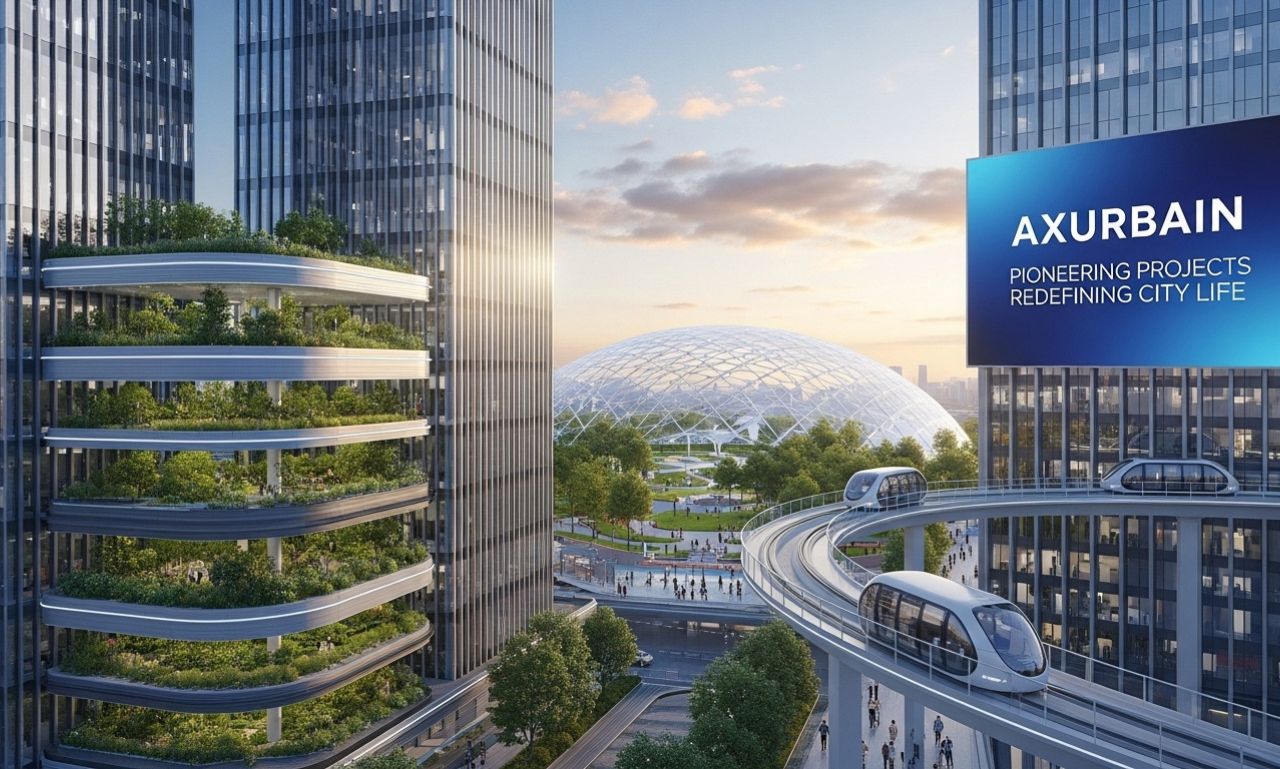
Urban mobility has become one of the defining challenges of the 21st century. As cities grow denser and populations more mobile, traditional transportation systems are struggling to keep pace with changing demands. Congestion, pollution, inefficiency, and inequitable access have forced city planners, innovators, and citizens alike to rethink how people move through urban spaces. In this evolving landscape, Axurbain is emerging as a transformative concept—one that reimagines urban mobility not as a collection of isolated systems, but as an intelligent, integrated, and human-centered experience.
This article explores how Axurbain is revolutionizing urban mobility solutions, what sets it apart from conventional approaches, and why it represents a compelling vision for the future of cities.
Table of Contents
ToggleThe Urban Mobility Crisis
Modern cities face a paradox. While technological progress has made transportation faster and more accessible, it has also introduced new problems. Roads are overcrowded, public transport systems are overburdened, and private vehicle dependence continues to rise in many regions. These issues result in lost productivity, environmental degradation, and declining quality of life.
Urban mobility is no longer just about moving from point A to point B. It now encompasses sustainability, accessibility, affordability, and resilience. Solutions must address not only infrastructure, but also behavior, policy, and digital integration. Axurbain enters this space with a holistic perspective that challenges outdated models of transportation planning.
Understanding Axurbain
Axurbain is best understood as a mobility ecosystem framework rather than a single product or service. It represents a new way of designing, managing, and experiencing movement within cities. At its core, Axurbain prioritizes seamless connectivity, smart coordination, and user-centric design.
Unlike traditional mobility systems that operate in silos—separating buses, trains, bikes, and pedestrian pathways—Axurbain emphasizes integration. It seeks to unify diverse modes of transport into a coherent system that responds dynamically to real-time conditions and user needs.
A Shift from Infrastructure to Intelligence
One of the most revolutionary aspects of Axurbain is its focus on intelligence over expansion. Instead of endlessly building new roads or expanding physical infrastructure, Axurbain leverages data, digital tools, and adaptive systems to optimize existing resources.
Through smart traffic management, predictive analytics, and responsive routing, Axurbain reduces congestion without requiring massive construction projects. This approach not only lowers costs but also minimizes environmental disruption—an increasingly important consideration in urban development.
Human-Centered Mobility Design
Axurbain places people at the center of urban mobility design. Traditional systems often prioritize vehicles over users, leading to unsafe streets and inaccessible services. Axurbain challenges this by emphasizing walkability, inclusivity, and user experience.
This human-centered approach ensures that mobility solutions work for everyone, including children, elderly citizens, and people with disabilities. Clear navigation, intuitive interfaces, and equitable access are foundational principles rather than afterthoughts.
Sustainability as a Core Principle
Sustainability is not an optional feature in the Axurbain framework—it is a core requirement. Urban transportation is a major contributor to greenhouse gas emissions, making mobility reform essential for climate goals.
Axurbain promotes low-emission transport modes such as electric public transit, cycling infrastructure, and shared mobility services. By encouraging modal shifts away from private car ownership, it helps cities reduce their carbon footprint while improving air quality and public health.
Multimodal Integration
A defining feature of Axurbain is its emphasis on multimodal mobility. Instead of forcing users to rely on a single mode of transport, Axurbain enables smooth transitions between walking, cycling, public transit, and shared vehicles.
For example, a commuter might walk to a transit hub, take a train, and complete the final leg of their journey using a shared electric bike—all coordinated through a unified system. This flexibility reduces travel time, increases convenience, and makes sustainable choices more attractive.
Digital Platforms and Smart Coordination
Digital technology plays a crucial role in the Axurbain model. Centralized platforms allow users to plan routes, access services, and receive real-time updates. At the same time, city administrators gain valuable insights into usage patterns and system performance.
This data-driven approach enables continuous improvement. Traffic flows can be adjusted dynamically, public transport schedules optimized, and maintenance needs predicted before failures occur. Axurbain transforms mobility from a static service into a living, adaptive system.
Redefining Public and Private Mobility
Axurbain also blurs the traditional boundaries between public and private mobility. Rather than treating them as competing forces, it encourages collaboration. Public transit systems, private mobility providers, and urban planners work within a shared framework.
This cooperative model fosters innovation while maintaining public oversight. It ensures that mobility solutions serve collective interests rather than fragmenting the urban transport landscape.
Equity and Accessibility in Urban Movement
One of the most important contributions of Axurbain is its focus on mobility equity. Access to reliable transportation is closely linked to economic opportunity, education, and social inclusion. Axurbain recognizes mobility as a fundamental urban service, not a privilege.
By designing systems that reach underserved neighborhoods and remain affordable, Axurbain helps reduce social disparities. Its inclusive planning approach ensures that all residents benefit from improved mobility, not just those in central or affluent areas.
Economic Benefits of Axurbain
Efficient mobility is a powerful economic driver. Reduced congestion saves time and fuel, while reliable transport networks attract businesses and investment. Axurbain enhances urban productivity by making movement more predictable and efficient.
Additionally, the development and maintenance of smart mobility systems create new jobs in technology, planning, and sustainability sectors. Axurbain thus contributes to economic resilience alongside environmental and social benefits.
Adapting to Future Urban Challenges
Cities are constantly evolving, and mobility systems must adapt accordingly. Population growth, climate change, and shifting work patterns require flexible solutions. Axurbain’s modular and data-driven design makes it well-suited to future challenges.
Whether responding to sudden demand spikes, extreme weather events, or long-term demographic changes, Axurbain enables cities to remain agile. Its emphasis on adaptability ensures long-term relevance rather than short-term fixes.
Axurbain Compared to Traditional Mobility Models
Traditional urban mobility models often rely on linear planning and static infrastructure. Once built, systems are difficult and expensive to modify. Axurbain represents a fundamental departure from this approach.
By prioritizing integration, intelligence, and human experience, Axurbain creates mobility systems that evolve alongside the city itself. This flexibility is what makes it revolutionary rather than incremental.
Cultural Impact and Urban Lifestyle
Beyond logistics and infrastructure, Axurbain influences how people experience city life. Reduced congestion, safer streets, and improved accessibility encourage outdoor activity, social interaction, and community engagement.
As mobility becomes easier and more pleasant, cities become more livable. Axurbain supports a cultural shift toward sustainable, connected, and people-friendly urban environments.
The Global Relevance of Axurbain
While Axurbain is adaptable to local contexts, its principles have global relevance. Cities across different regions face similar mobility challenges, even if their resources and constraints differ.
Axurbain’s scalable framework allows it to be implemented in diverse urban settings—from rapidly growing megacities to smaller metropolitan areas seeking smarter mobility solutions.
Conclusion
Axurbain represents a bold reimagining of urban mobility. By moving beyond fragmented systems and outdated infrastructure-first thinking, it offers a holistic, intelligent, and human-centered approach to how cities move.
Its focus on integration, sustainability, equity, and adaptability positions Axurbain as a powerful force in shaping the future of urban transportation. As cities search for solutions that balance growth with livability, Axurbain stands out as more than a trend—it is a vision for cities that move smarter, cleaner, and more inclusively.